
Our Work and Impact
Turning commitment into action
Shelter Shield’s work began with community-based first aid and awareness initiatives in 2022. Since then, our commitment has been to help communities become better prepared and to strengthen support for people affected by road traffic crashes.
Our activities are intended to demonstrate practical action, community engagement and a commitment to improving post-crash care.
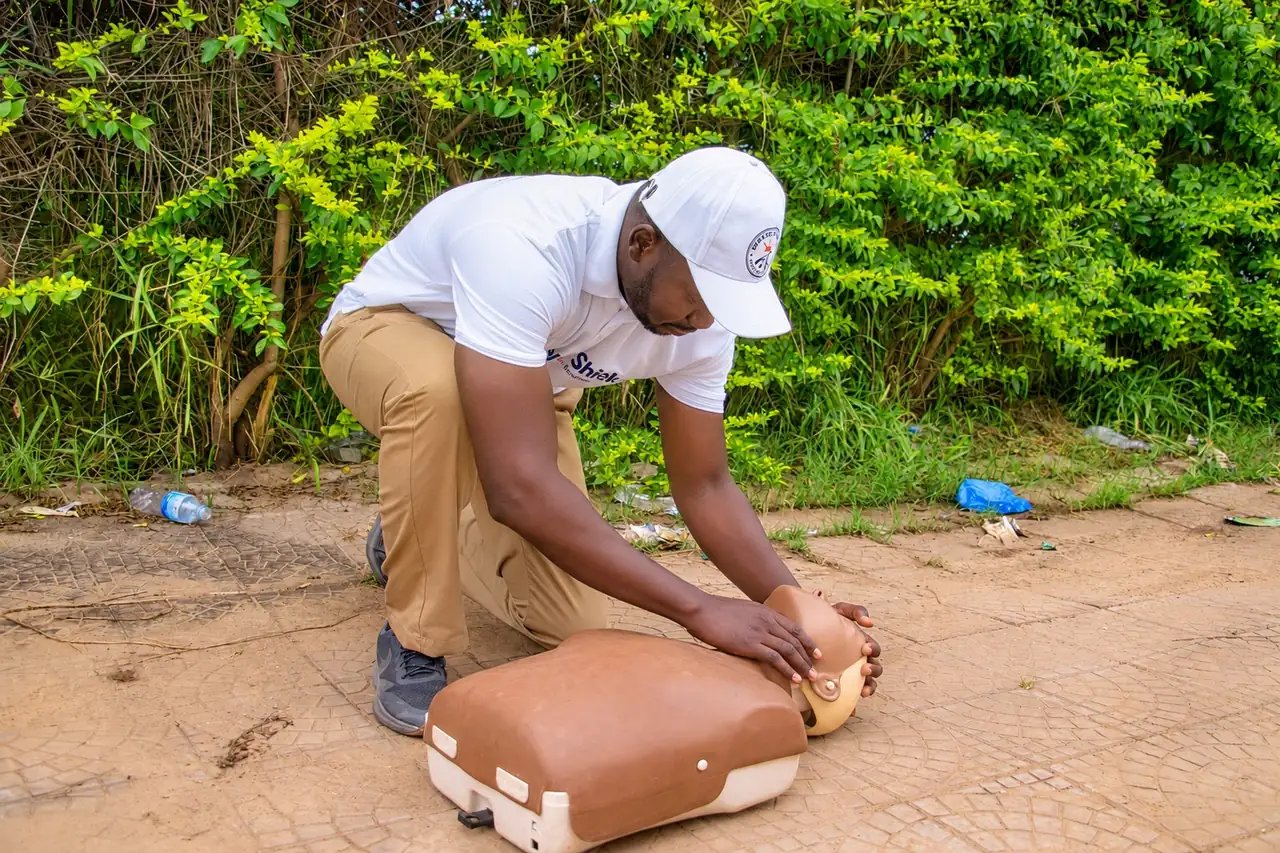
Our impact at a glanceCommunity first-aid training activities conducted since 2022.
73
Drivers and community members trained
45
First-aid kits distributed
13
Communities reached and outreach activities conducted
Strengthening community preparedness and post-crash response
The moments after a road crash can be frightening and uncertain. While professional medical care is essential, people at the scene may be able to take safe, appropriate first steps and help connect an injured person with assistance.
Shelter Shield works to strengthen community preparedness and improve the response to road-crash emergencies in The Gambia. Through first-aid kit distribution, community training and engagement with public institutions, we aim to help more people understand how to respond responsibly while professional support is being arranged.
Our work is guided by a simple belief: communities should not be left feeling helpless when a road emergency occurs. With access to basic supplies, practical knowledge and clear guidance, people can be better prepared to help—without putting themselves or others at unnecessary risk.
First-aid kits for drivers and communities
Making essential supplies more accessible
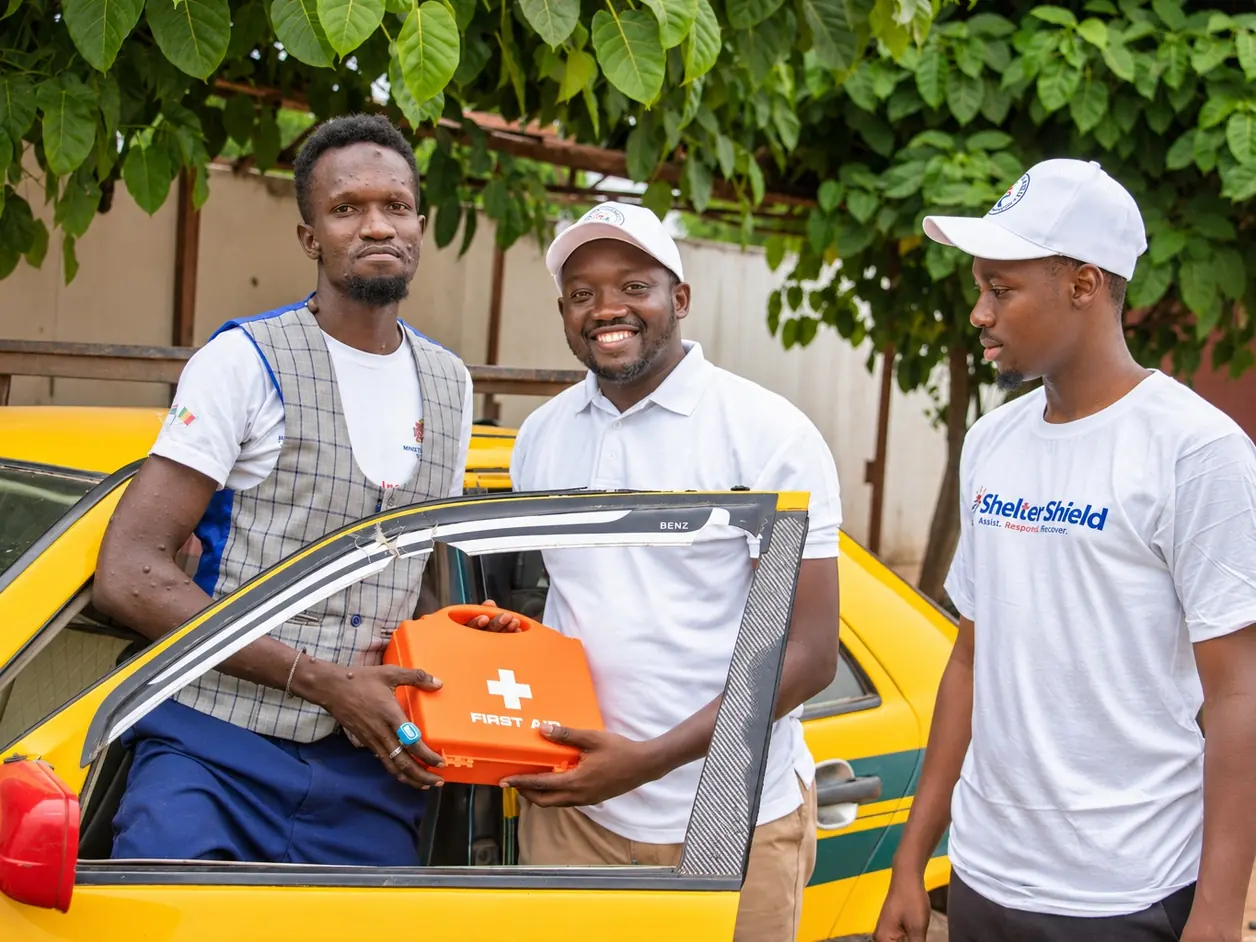
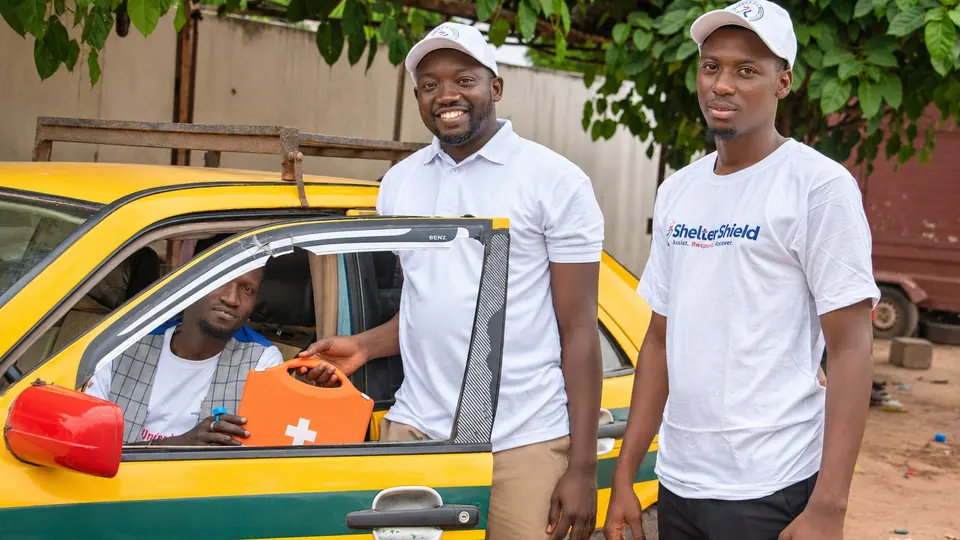
Shelter Shield distributes first-aid kits to drivers, transport operators and community members to support preparedness at the community level. Drivers and local residents may be close to an incident before professional responders arrive. Having basic supplies available can help them take appropriate early steps while seeking professional assistance.
Kit distribution is one part of a broader approach. Supplies are most useful when people understand their purpose, know how to use them safely and recognise when to wait for trained medical responders. Shelter Shield promotes responsible use of first-aid resources as part of a coordinated response, not as a substitute for professional care.
Through this work, we aim to:
- Improve access to basic first-aid supplies among drivers and community members.
- Encourage greater awareness of preparedness and early assistance after a crash.
- Promote responsible, safer community action while professional help is being sought.
- Strengthen community involvement in post-crash response.

Free community first-aid training
Building knowledge and confidence to respond safely
Shelter Shield provides free first-aid training for drivers, community members and other interested groups. The training introduces participants to essential first-aid principles and helps them understand how to respond appropriately while waiting for professional medical assistance.
Topics include recognising an emergency, assessing immediate safety, seeking help, basic casualty support and responding within the limits of one’s training. The precise content is adapted to the training provided and the needs of the group.
First aid is not only for healthcare professionals. Drivers, transport workers and community members may be present when an emergency occurs. With practical knowledge and a clear understanding of their role, they can help seek assistance and take appropriate early action—while avoiding unsafe or untrained interventions.
Our training aims to:
- Increase understanding of basic first aid and emergency preparedness.
- Help participants recognise safer and more appropriate actions at a crash scene.
- Build confidence to seek help promptly and support an injured person within their level of training.
- Encourage a responsible community contribution to post-crash response.
- Lay a foundation for stronger community responder networks.
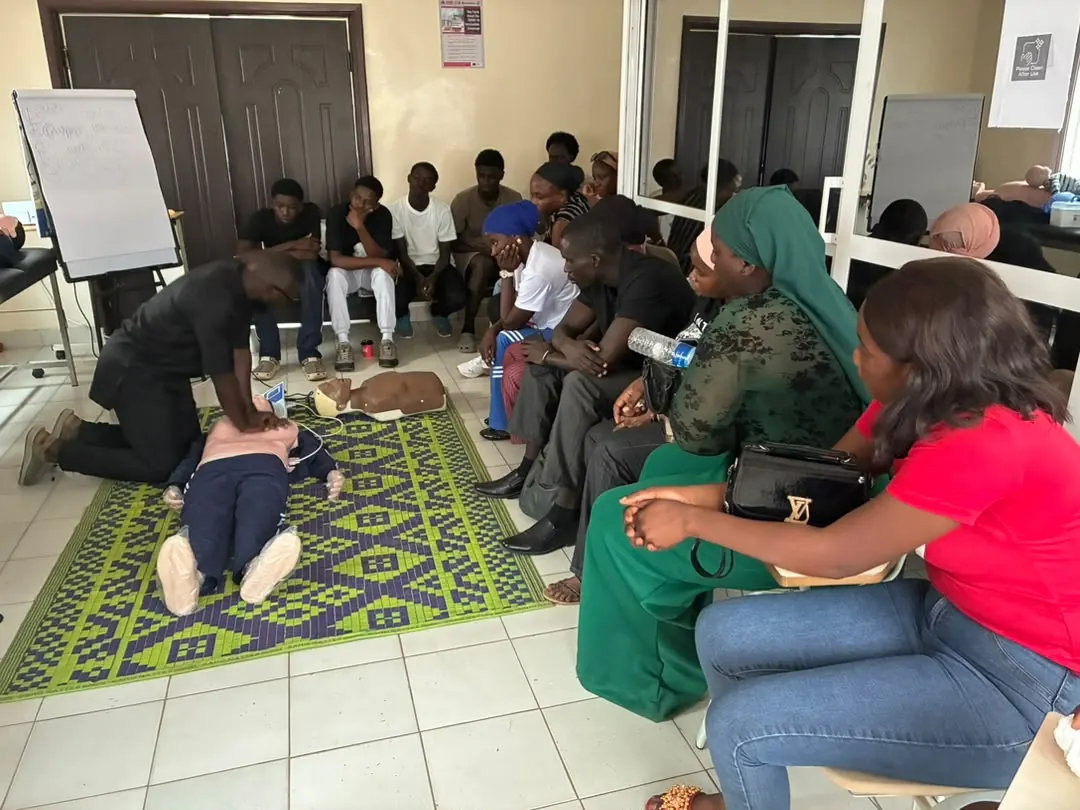
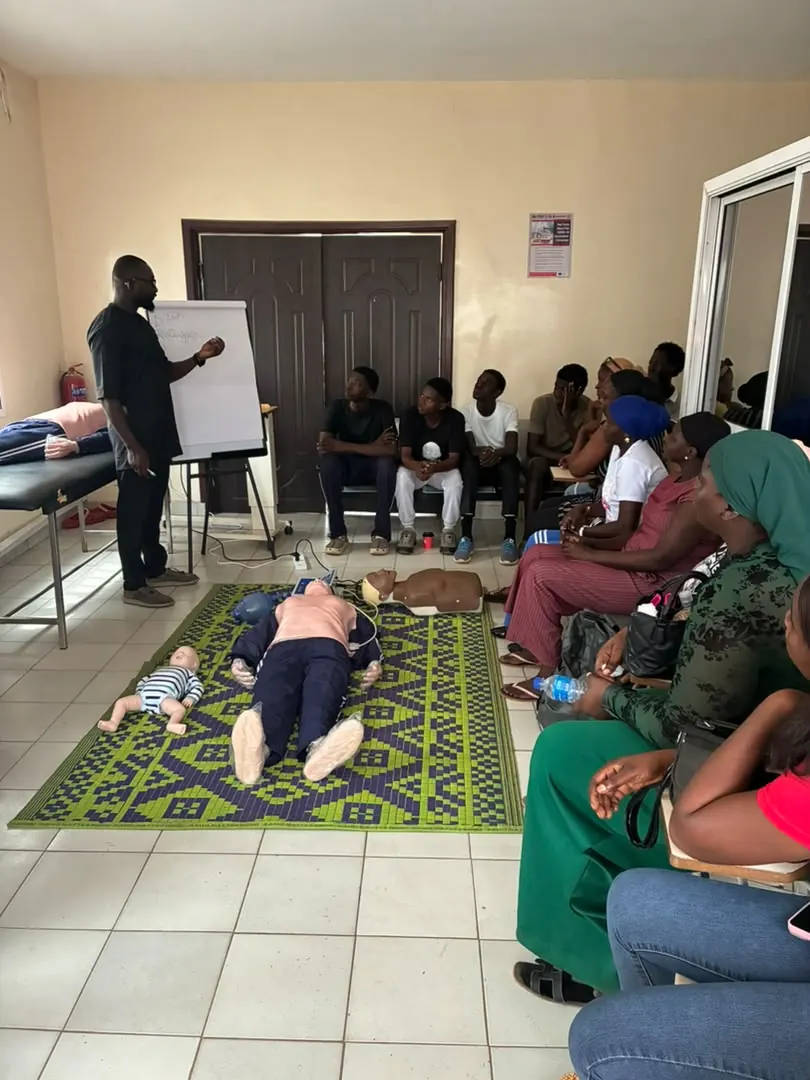
First-aid training for The Gambia Police Force
Supporting institutional capacity and coordination
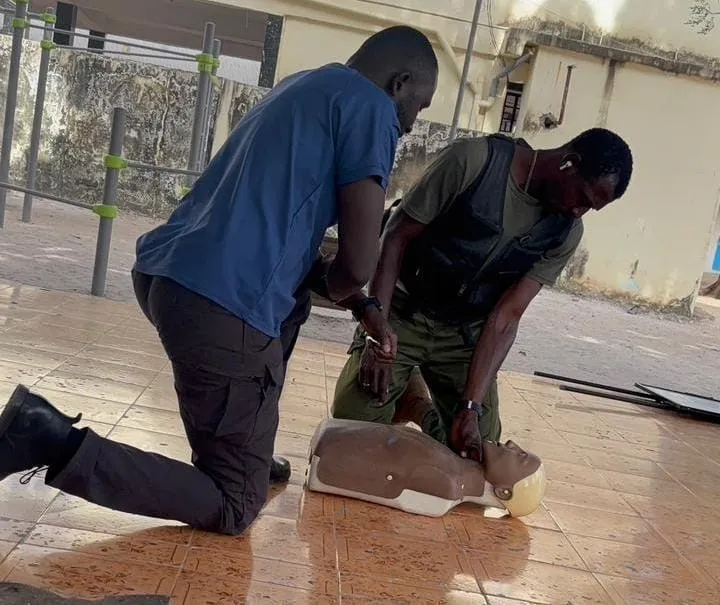
Police officers play an important role in road safety and may be among the first public officials to arrive at a crash scene. Their responsibilities can include managing traffic and scene safety, assisting with communication and helping connect injured people with emergency medical services.
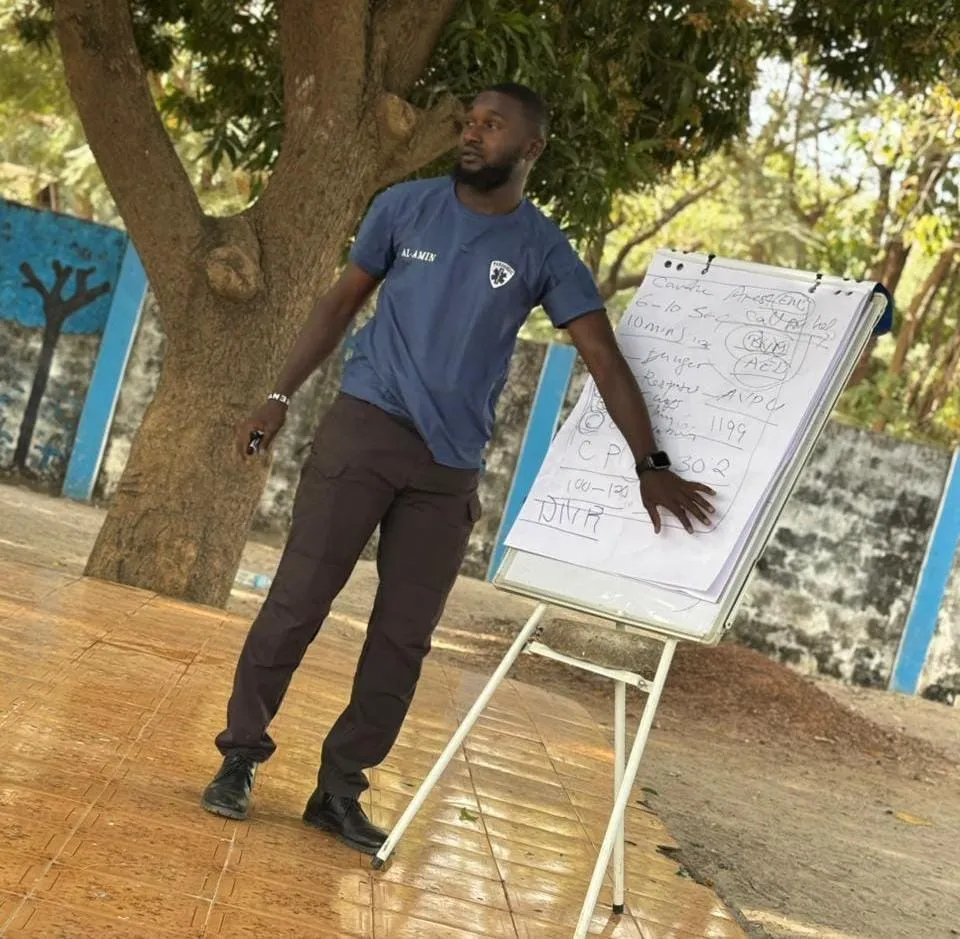
Shelter Shield has undertaken first-aid training initiatives involving personnel of The Gambia Police Force. These initiatives aim to strengthen participants’ awareness of basic first aid, appropriate initial assistance and the importance of timely referral to medical care.
Building capacity within public institutions is one part of a wider response. Effective post-crash support depends on coordination among police, health professionals, emergency responders and communities. Shelter Shield recognises the value of these relationships and seeks to contribute to a more informed and connected response to road emergencies.
This work aims to:
- Strengthen basic first-aid knowledge among participating officers.
- Improve awareness of appropriate initial assistance for injured people.
- Promote attention to casualty safety and timely referral to medical facilities.
- Encourage coordination between law enforcement and emergency medical responders.
- Support institutional capacity-building in post-crash response.
Our Commitment
These initiatives are part of Shelter Shield’s broader commitment to improving the response to road crashes in The Gambia. First-aid supplies and training can help people take informed early action, but lasting progress depends on a stronger, connected system—one that brings together prepared communities, capable institutions, coordinated emergency services, accessible healthcare and sustained support for survivors and their families.
We are committed to working alongside government institutions, emergency services, healthcare providers, development partners, civil society organisations and local communities. Through these partnerships, we aim to strengthen post-crash support and help ensure that people affected by road crashes are met with timely assistance, dignity and care.
Together, we can build safer communities and a stronger post-crash care system.