
Our Core Programmes · 01
Community First Responder Programme
Promote immediate first aid, crash-scene safety and community preparedness.
Our post-crash care pathway · Assist
Overview
In the first moments after a road crash, the people already nearby are often the first to notice what has happened. Their response can help protect an injured person from further harm and connect them to assistance. But people need practical guidance, confidence and clear limits: a well-intentioned action can become unsafe if a responder does not know what to do—or what not to do.
Shelter Shield’s Community First Responder Programme aims to build a prepared, informed network of community members, drivers, traffic police officers, etc., who can take safe, appropriate first steps while professional help is being contacted or arranged.
What the programme is designed to do
- Build practical knowledge of how to assess a scene without putting oneself or others in danger.
- Help responders recognise when an incident requires urgent professional assistance and how to communicate essential information clearly.
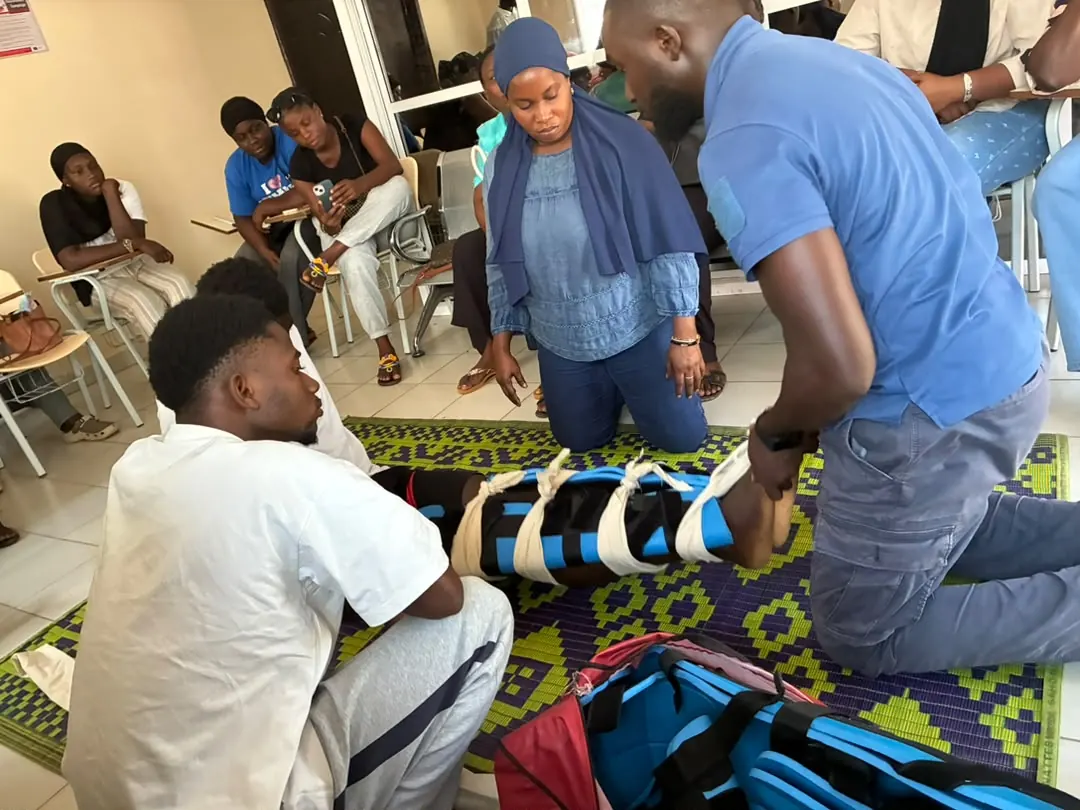
- Introduce basic first-aid actions appropriate to the responder’s training, including how to offer reassurance and protect a casualty from avoidable risks while waiting for help.
- Promote safe, respectful treatment of injured people, including privacy, consent where possible and attention to children, older people and people with disabilities.
- Connect trained community responders with clear referral and escalation routes, local health facilities and relevant emergency services.
- Support community preparedness through refresher learning, practice and peer exchange, subject to available resources and qualified training partners.
How it can work in practice
The programme begins with community consultation to understand local crash patterns, travel routes, communication barriers and the help already available. Together with relevant authorities, Shelter Shield can identify suitable participants and agree on the scope of training, referral arrangements and safety protocols. Training should be practical and accessible, with content adapted to local language, literacy and context. Participants can practise how to call for help, share a location, keep themselves safe and respond calmly within their level of competence.
The programme will also help communities identify and support responder groups, maintain contact lists, map nearby facilities and establish simple procedures for notifying emergency services and arranging assistance. Any first-aid equipment or kits should be selected with qualified partners, matched to the training provided and accompanied by guidance on storage, replenishment and safe use.
The principles behind the programme
- Safety first: no responder should be encouraged to enter a dangerous scene or take on tasks beyond their training.
- Clear limits: community response complements professional care; it does not diagnose injuries or replace clinicians.
- Dignity and respect: injured people are treated as people, not as a spectacle or a story to share.
- Local ownership: communities help shape the training, referral arrangements and ongoing support that make a response network useful.
- Learning over time: feedback, refresher sessions and review of real response experiences help improve practice.
What progress may look like
Progress will be reflected in more community members completing appropriate training; stronger awareness of how to summon assistance; better knowledge of safe actions and limits; improved links between communities and responders; and feedback showing that participants feel more prepared to act responsibly. Shelter Shield will seek to learn not only how many people are trained, but whether the training is understood, retained and useful in the local context.
Our Core Programmes
- 01Community First Responder Programme
Equipping drivers, transport operators and community members with basic first aid knowledge and the confidence to respond appropriately.
- 02Emergency Response & Safe Victim Transfer
Promoting early assistance, coordination with relevant emergency services and safe access to appropriate healthcare.
- 03Victim Recovery and Reintegration
Recognising that the needs of survivors continue beyond hospital treatment and supporting their rehabilitation and return to community life.
- 04Advocacy, Policy Engagement and Research
Working with relevant stakeholders to strengthen policies, services and systems that support road-crash victims.